Minds in the 21st century.

When a distinguished but elderly scientist states that something is possible he is almost certainly right. When he states that something is impossible, he is very probably wrong.

Arthur C. Clarke's 1 law.


At the present rate of progress, it is almost impossible to imagine any technical feat that cannot be achieved - if it can be achieved at all - within the next few hundred years.

Arthur C. Clarke, 1983.

Saturday, February 26, 2011

Penkowa sagen - et forsøg på lidt oversigt, februar 2011.

Sidste år blussede sagen så på ny op omkring ''eliteforskeren'', der nu bliver beskyldt for både videnskabelig og økonomisk uredelighed.
http://da.wikipedia.org/wiki/Milena_Penkowa

58 forskere har bedt om en tilbundsgående uafhængig undersøgelse: Københavns Universitetets troværdighed som samarbejdspartner og universitetets videnskabelige integritet står på spil.

Penkowa modtager kongeligt håndtryk og pris:
----------------------------------------------------------------
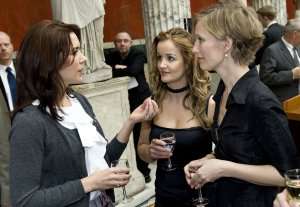
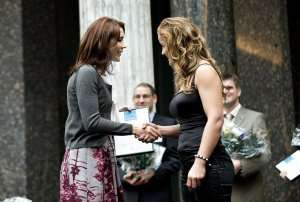


Og knus fra Ida Auken.

Baggrund - Begyndelsen: Penkowa som studerende:
======================================
I 1997 forfattede hun sammen med sin senere mand, Chr. Bjørn Poulsen, et læserbrev til Information. Det gav stud.med. Bjarke Lund Sørensen anledning til at skrive i 1997 om Penkowa:
Penkowa skrev om medstuderende der måtte give op på studiet:
De mangler motivation, interesse og entusiasme, et såkaldt ‘lægevidenskabeligt drive’, det, der tidligere hed et ‘kald’. De studerende, der må give op, tror lægestudiet er et 8-16 job, hvorefter de “fornøjer sig i byen”, og de mangler en “dybtfølt interesse for det lægevidenskabelige univers”.
Jeg er enig i, at man skal være faglig kompentent og velorienteret som læge, men mindst lige så vigtigt er det at være menneskelig kompetent, at man er i stand til at leve sig ind i den følelsesmæssigt svære situation, som alle, der er ramt af sygdom, er i, at man kan interessere sig for andre mennesker end sig selv, sin karriere og sine
‘forskningsprojekter’. Jeg har flere gange af patienter fået at vide, at
hvis jeg vil være en god læge, så skal jeg kunne lytte, underfor-stået, at der
er en del læger, der ikke lytter efter. Det er et udpræget problem for standen,
at der er en del læger, der ikke er menneskeligt modne til at kunne kommunikere
ordentligt med patienterne.
I øvrigt bygger videnskab på en sober, uforudindtaget tilgang til et problemfelt. Milena Penkowas og Chr. Bjørn Poulsens grove sætten 30% af medicinstuderende i bås som dovne og uengagerede er udtryk for en meget fordomsfuld indstilling, der ikke lover godt for deres fremtidige muligheder som ordentlige forskere.
http://www.information.dk/12276

''Hvis man kan lide at blive målt og vejet, så er det, fordi man ved, at man kan tåle at blive målt og vejet. Hvis du ikke kan finde ud af det, vil du helst undgå det''
http://blog.180grader.dk/rasmusolehansen/2009/07/05/milena-penkowakonkurrence-er-samfundets-drivende-kraft/
»Konkurrenceelementet var det, der tiltrak mig ved ridning. Ikke hestene,« har
hun siden fortalt.
http://www.information.dk/259291

De mange hædersbevisninger, der hænger i glas og rammer i Milena Penkowas soveværelse og udklippene på indersiden af en lang køkkenlåge, taler deres tydelige sprog: Hun kan sit kram. Hun er ganske vist ikke kendt-kendt som hjerneforsker Peter Lund Madsen, men måske er der en ny folkelighed på vej?
http://www.fri.dk/personlig-udvikling/hun-har-kun-en-ting-i-hovedet


Professor ved Aalborg Universitet Torben Moos kender om nogen den stædighed, som har kendetegnet Milena Penkowas succesfulde karriere gennem en årrække:
Han vejledte Penkowa, da hun var medicinstuderende, og skrev videnskabelige
artikler med hende i perioden 1994 til 1998. I to måneder frem til marts 1999
var han Penkowas ph.d.-vejleder.
Men samtidig udviste hun også en i
særklasse 'ingen skal fortælle mig, at jeg gør noget forkert'-attitude, der
nærmest er umulig at forene med videnskabens krav om objektivitet, selvkritik og
imødekommenhed for kritik fra andre kolleger, husker Torben Moos.

http://ekstrabladet.dk/nyheder/samfund/article1509575.ece

Penkowas far :
===========

Skulle anklagen for dokumentfalsk ende med at sende den 37-årige hjerneforsker Milena Penkowa bag tremmer, kan hun i den nærmeste familie hente råd om, hvordan man bedst tackler livet bag tremmer
– Det vil jeg så beklage og meget gerne rette. Men det er korrekt, at du har en dom på to års fængsel for at have ribbet talrige sommerhuse?

Jeg kan ikke se, hvad min fortid kommer jer ved
Fortiden har han forsøgt at skjule ved at drage i eksil i Thailand, hvor han sammen med sin thaifødte hustru Chom har fået opbygget Jungle Village-resortet i turistbyen Ao Nang, hvor mange danskere ferierer.

http://ekstrabladet.dk/nyheder/videnskab_og_teknik/article1506490.ece

Hendes far, Niels Pedersen, røg to år i spjældet med en ubetinget dom, efter han i midten af 1980'erne systematisk tømte talrige sommerhuse for møbler, skriver Ekstra Bladet
http://avisen.dk/ny-afsloering-penkowas-far-toemte-sommerhuse_141386.aspx

Artikel til Journal of Clinical Oncology
=============================


Sagen drejer sig om fortolkningen af vævsprøver fra lymfekræftpatienter, hvor Milena Penkowa var nået frem til et resultat, der afveg totalt fra resultaterne hos to andre hovedforfattere – to studerende som var de første til at have prøverne under mikroskopet.

Det fik institutlederen til at sikre sig Penkowas vævsprøver, som han derefter bad to eksperter analysere. Begge konkluderede, at de i alt 53 prøver i virkeligheden var af en så ringe kvalitet, at det reelt ikke log sig gøre at analysere dem og foretage relevante optællinger i dem, skriver Weekendavisen.

http://www.dagensmedicin.dk/nyheder/2010/11/12/eliteforsker-i-ny-sag-om/index.xml

http://politiken.dk/videnskab/article1195297.ece

Indklagelse af Penkowa til Københavns Universitets udvalg for god videnskabelig praksis.
=================================================
Professor i cellebiologi Elisabeth Bock indklagede Penkowa til Københavns Universitets udvalg for god videnskabelig praksis. Elisabeth Bock rejste spørgsmål ved et forskningsresultat, da hun i fire tilfælde ikke kunne genskabe de resultater, som Milena Penkowa angiveligt var nået frem til.
Endnu en gang slap Milena Penkowa dog ud af problemerne, da praksisudvalget efter at have rådført sig med en udenlandsk ekspert, konkludererede, at der ikke var grund til at kritisere forskningsresultaterne fra Penkowas laboratorium.

Klagen til Praksisudvalget seks år senere blev udløst, da professor i cellebiologi Elisabeth Bock i en intern redegørelse på universitetet fastslog, at analyseresultater fra Milena Penkowas laboratorium i fire tilfælde ikke kunne reproduceres, når de blev søgt efterkontrolleret i Elisabeth Bocks laboratorium.
http://forskningsfrihed.blogspot.com/2010/11/sagen-om-milena-penkowa-og-forskningens.html


Penkowa disputats:
===============

Første gang det skete var i 2002, da hendes doktordisputats blev underkendt af bedømmelsesudvalget, fordi de var usikre på, om Milena Penkowas forskning virkelig var afprøvet på 1.000 rotter, som hun skrev i disputaten. De tre professorer i bedømmelsesudvalget mente, at det var om ikke umuligt, så i hvert fald temmelig usandsynligt, at afprøve resultaterne på 1.000 forsøgsdyr under de beskrevne forhold.

Ralf Hemmingsen, universitetets rektor, indkaldte højst udsædvanligt to udenlandske eksperter, til at eftergå udvalgets bedømmelse. De endte med at underkende bedømmelsen, og gav dermed Milena Penkowa oprejsning i sagen.

http://www.dagensmedicin.dk/nyheder/2010/11/12/eliteforsker-i-ny-sag-om/index.xml

Sagen begyndte, da det første bedømmerudvalg bestående af professorerne Per Soelberg Sørensen, Bente Finsen og Henning Laursen afviste hendes disputats. De var usikre på den videnskabelige standard. Udvalget undrede sig bl. a. over, at der som angivet af Penkowa i hendes publicerede videnskabelige arbejder skulle være udført forsøg på op imod 1.000 rotter. Eksperterne fandt det om ikke umuligt så temmelig usandsynligt med så mange forsøgsdyr under de beskrevne omstændigheder.
Efterfølgende besluttede den daværende dekan ved Det Sundhedsvidenskabelige Fakultet, nuværende rektor Ralf Hemmingsen imidlertid højst usædvanligt at indkalde to udenlandske eksperter, en svensker og en nordmand, til at bedømme bedømmernes arbejde. Resultatet blev en desavouering af bedømmelsesudvalget og dermed reelt en oprejsning for Penkowa.

http://forskningsfrihed.blogspot.com/2010/11/sagen-om-milena-penkowa-og-forskningens.html

Rektor underkendte det første bedømmer udvalg, og det nye udvalg (fra udlandet)
kom i 2004 frem til, at der ikke var noget galt med Penkowas disputats. Tværtimod konkluderede professorerne, at bedømmelsesudvalget hverken havde »tilstrækkelig evne og vilje til at forstå materialet og metoderne.
http://politiken.dk/videnskab/article1166037.ece

Meget taler for, at der slet ikke bliver rejst en sigtelse mod Milena Penkowas i sagen om dokumentfalskneri i forbindelse med flere end 700 rotteforsøg.
http://www.bt.dk/danmark/advokat-rotte-anklage-mod-penkowa-er-foraeldet
http://ing.dk/artikel/116440-minister-rektors-rolle-i-penkowa-sagen-skal-undersoeges

Underslæb:
=========


Hun står nu anklaget for som kasserer i en forening af forskere i 2007 at have overført 27.833 kroner af foreningens penge til andre konti.
Ifølge politiets anklageskrift lavede hun dokumentfalsk ved at bruge falske bilag og e-mail til at få pengene udbetalt.

Da politiet i oktober 2008 afhørte hende, forsøgte hun at skyde skylden på en af sine ph.d.-studerende, som hun ifølge anklageskriftet 'underbyggede ved at benytte to falske kontoudtog'.

Forskerforeningen siger gennem sin formand.
- Det er rigtigt, at vi har politianmeldt sagen. Og så har vi ikke mere at tilføje, siger formanden
http://www.bt.dk/krimi/kendt-forsker-tiltalt-underslaeb

En kvindelig forsker fra Københavns Universitet er blevet dømt for underslæb, forfalskning af dokumenter og falsk anklage. Men hun nægter sig skyldig og har derfor anket dommen.
Af Københavns Byret blev den kvindelige forsker fredag eftermiddag idømt tre måneders betinget fængsel for underslæb til 27.000 kroner imod en forening, hvor hun var kasserer.

Under et tidligere retsmøde antydede kvinden at være offer for et komplot udtænkt af en konkurrent, der samtidig var formand for foreningen.
- Vi søgte de samme stillinger og fondsmidler. Det ville være nemmere for den ene, hvis den anden ikke var der, sagde den anklagede forsker.
Det afviste konkurrenten.

Udover dommen for underslæb, blev hun også dømt for at fabrikere falske bilag.
For eksempel blev otte sandwich til 58 sandwich. Refusionen for mere eller mindre fiktive udgifter havnede på forskerens egen konto via girokort med en underskrift, som hun - noget modvilligt - erkendte mindede om hendes egen.

http://www.bt.dk/krimi/kvindelig-forsker-idoemt-faengsel

Det fremgår af et notat fra selskabet, og den daværende institutleder, Erling Mellerup, bekræfter, at han opfordrede selskabet til at trække politisagen.
»Det var min holdning, og det er det stadigvæk, at det var noget pjat at anmelde en forsker til politiet for 30.000 kr. Der var så mange, der havde rod i deres fondsregnskaber. Så har det måske efterfølgende i denne sag vist sig, at det var værre, men dengang havde jeg indtryk af, at det bare var sjusk«, siger Erling Mellerup.
http://politiken.dk/videnskab/ECE1196300/universitet-ville-forhindre-politisag-mod-topforsker/


Misbrug af forskningspenge:
======================

Forskeren Milena Penkowa, der i forvejen er under mistanke for videnskabelig uredelighed, mistænkes nu også for at have misbrugt mellem to og tre millioner kroner af en forskningsbevilling til private formål såsom advokatregninger, tøj, rejser og middage.

Ifølge avisen har den private IMK Almene Fond meddelt Københavns Universitet, at op imod halvdelen af en rekordstor bevilling til Milena Penkowa er brugt til formål, som intet har med forskning at gøre, og fonden nægter derfor at godkende regnskabet for bevillingen.

http://ekstrabladet.dk/112/article1458651.ece

http://jp.dk/indland/article2257913.ece

Den 36-årige Milena Penkowa er ifølge meddelelsen ikke blevet opsagt af Københavns Universitet, men har valgt at fratræde sin stilling af egen vilje.
Milena Penkowa havde brugt mellem to og tre af de 5,6 mio.kr., som IMK Almene fond i 2005 donerede til professorens forskning, til private formål som advokatregninger, tøj, rejser og middage.

http://jp.dk/indland/article2274007.ece

Men nu viser det sig, at universitetet har sendt en del af regningen videre til forskeren.
http://politiken.dk/videnskab/ECE1165914/omstridt-hjerneforsker-tvunget-til-tilbagebetaling/

http://www.dagensmedicin.dk/nyheder/2011/01/13/penkowa-skal-betale-forskn/index.xml

Tidligere har Milena Penkowa betalt 276.000 kroner tilbage til Københavns Universitet, fordi hun havde brugt dem uretmæssigt på advokatregninger.
http://avisen.dk/milena-penkowa-meldt-til-politiet_141134.aspx

Penkowa og rektor Hemmingsen:
=========================

Ralf Hemmingsen forsikrer ( WA 26.11.), at han »har forvaltet sagen [ om Milena Penkowa ] udelukkende sagligt« :

Alvorligt er det derimod, at rektor endnu ikke har dementeret Weekendavisens uhyrlige påstand (12.11.) om, at en anden forsker, Elisabeth Bock, skulle være blevet »udstyret med en mundkurv af universitetets jurister, der fastslog, at det kunne være strafbart, hvis hun fortsat satte spørgsmålstegn ved Penkowas forskning«. Her stiger den lille tvivl til galopperende foruroligelse. For hvis forsker A nærer tvivl om kvaliteten af forsker Bs resultater, er det naturligvis As pligt at gøre udtrykkeligt opmærksom på dette.

http://forskningsfrihed.blogspot.com/2010/12/mundkurve-og-rektors-rolle-i-penkowa.html

http://politiken.dk/debat/ledere/ECE1174717/ku-maa-til-bunds-i-sag-om-forskersvindel/

Selv om universitetets ledelse var gjort opmærksom på sagen, fastholdt den indstillingen af forskeren til en millionpris.
På den baggrund bad han universitetsledelsen gennemføre en undersøgelse af sagen. Men det blev afvist.
Københavns Universitets chefkonsulent, Dorrit Wivel, svarede 9. januar 2009, »at Københavns Universitet ikke på det foreliggende grundlag har nogen mulighed for at afgøre, hvad der er faktum i sagen«.
http://politiken.dk/videnskab/ECE1178136/universitet-lagde-laag-paa-falskneri/

Københavns Universitets rektor Ralf Hemmingsen har truet med at fyre en af de forskere, der har været mest kritisk over for universitetets håndtering af sagen om den politianmeldte hjerneforsker Milena Penkowa.Truslen mod professor Elisabeth Bock ...
http://www.bt.dk/danmark/ku-rektor-truede-kritiker-med-fyring

Én af de mest fremtrædende kritikere af Københavns Universitet (KU) i sagen om den svindelmistænkte forsker Milena Penkowa, professor Elisabeth Bock, skal kigges efter i sømmene.
http://www.dr.dk/Nyheder/Indland/2011/02/23/122228.htm

Mens Penkowa-sagen således nu synes at udvikle sig fra dag til dag, rettes søgelyset i stigende grad mod rektor Ralf Hemmingsens rolle i sagen, selvom han i givet fald nu måtte have godkendt afskedigelsen af Milena Penkowa. Det var nemlig ham, der for otte år siden som dekan for Det Sundhedsvidenskabelige Fakultet besluttede at nedsætte et udvalg til bedømmelse af Penkowas disputatsbedømmere, og mens det ikke er helt ualmindeligt i den danske universitetsverden, at en disputats bliver afvist, er det i højeste grad usædvanligt, at disputatsudvalget efterfølgende bliver genstand for en undersøgelse. Ingen, som Weekendavisen har talt med, kender fortilfælde. Det var også Ralf Hemmingsen, som formelt godkendte indstillingen til Forskningsministeriet af Milena Penkowa som modtager af prisen som eliteforsker, selv om han var bekendt med den tvivl, der af kolleger flere gange var rejst om lødigheden af hendes forskning.
http://www.weekendavisen.dk/art/mistaenkt-million-misbrug

Han tog derfor kontakt til Det Sundhedsvidenskabelige Fakultet i København, da han kom hjem til Danmark.

»Så regnede jeg med, at universitetet ville håndtere sagen. Men i stedet fik hun lov at fortsætte, og universitetet præmierede hende endda. Jeg forstår ikke, at Ralf Hemmingsen turde. Vi gik blot og ventede på, at bomben ville springe«.
http://politiken.dk/videnskab/ECE1195297/rektor-kendte-spanske-advarsler-om-penkowa/

Derfor hedder det i svaret til universitetet blandt andet, at redegørelsen også »bør beskrive rektors håndtering af sagen på lige fod med beskrivelsen af bestyrelsens håndtering af sagen«.
http://politiken.dk/videnskab/ECE1192346/minister-kraever-rektors-rolle-i-penkowa-sagen-undersoegt/


Penkowa og institutleder Erling Mellerup
===============================

Det fremgår af et notat fra selskabet, og den daværende institutleder, Erling Mellerup, bekræfter, at han opfordrede selskabet til at trække politisagen.

»Det var min holdning, og det er det stadigvæk, at det var noget pjat at anmelde en forsker til politiet for 30.000 kr. Der var så mange, der havde rod i deres fondsregnskaber. Så har det måske efterfølgende i denne sag vist sig, at det var værre, men dengang havde jeg indtryk af, at det bare var sjusk«, siger Erling Mellerup.
http://politiken.dk/videnskab/ECE1196300/universitet-ville-forhindre-politisag-mod-topforsker/


Penkowas mor og søster:
===================

Da Københavns Universitets rektor i 2006 var til festmiddag med den svindelanklagede Milena Penkowas søster og mor sagde han tillykke. Egentlig burde han have kondoleret. For på det tidspunkt havde de været døde i tre år. Det var i al fald hvad Penkowa havde skrevet i et brev til selvsamme rektor, og brugt som undskyldning for at sjuske med en doktorafhandling.

- Onsdag 14. maj forulykkede min mor og søster i Belgien i bil, hvorefter jeg har brugt meget tid på hospitalet og især begravelsen, skrev Penkowa i sin begrundelse. Det har vist sig at begge lever i bedste velgående.

Derfor undrer det flere i det universitetsmiljøet, at rektor Ralf Hemmingsen kunne deltage i festen, da Penkowa tre år senere fejrede sin nye doktorgrad, uden at bemærke at de to døde nu pludselig var spillevende. De stolte familiemedlemmer hilste endda på rektoren.

- Jeg hilste på dem begge, men jeg var ikke klar over at de var døde, siger professor Elisabeth Bock til Politiken.

http://www.bt.dk/danmark/gik-til-fest-med-fup-forskerens-doede-soester-og-mor

På et tidspunkt blev Milena Penkowa anklaget i byretten
men i retten brugte Milena Penkowa sin mors kræftsygdom som forklaring på, hvorfor sagen opstod i 2007.

Ifølge Milena Penkowas forklaring i vidneskranken, der bliver bekræftet af to vidner, der var til stede i retten og dommerens referat fra sagen, som B.T. er i besiddelse af, så var hun fra 1. januar til 31. december 2007 stort set ikke til stede på universitetet.

Årsagen var, at hendes mor havde kræft, og sygdommen udviklede sig kaotisk. Så i hele 2007 sad hun ved siden af sin mor ved strålekanonen, mens hun var mere afdelingsleder af navn end af gavn.

Københavns Universitet fortæller til B.T., at Milena Penkowa næsten var på arbejde hver dag i 2007. Og moderen Pirinka Lyager, der lever i bedste velgående i Kalundborg, fortæller til B.T., at hun slet ikke fik strålebehandling i 2007.

http://www.bt.dk/danmark/penkowa-loej-om-sin-mors-kraeft-i-retten


Penkowa indstillede sig selv til at blive eliteforsker ved ansøgning til videnskabsministeriet:
=================================================


Den svindelanklagede hjerneforsker, Milena Penkowa, sørgende selv for anbefalingen fra sit eget Sundhedsvidenskabelige Fakultet på Københavns Universitet (KU), da hun i 2009 modtog den prestigefyldte EliteForsk-pris på 1,1 millioner kroner.
http://borsen.dk/nyheder/karriere/artikel/1/201968/penkowa_indstillede_sig_selv_til_pris.html
Københavns Universitet fortryder nu, at det indstillede den omstridte hjerneforsker Milena Penkowa til den store eliteforskerpris i 2009
http://politiken.dk/videnskab/ECE1192479/universitet-vi-fortryder-vi-gav-penkowa-eliteforskerprisen/


Penkowa og tidligere "forskningsminister" Helge Sander.
==========================================

Det kræver en samlet venstrefløj, efter at B.T. i går kunne fortælle, at Helge Sander har givet gode råd til professor og hjerneforsker Milena Penkowa, som han som minister har tildelt 1,1 million kroner i form af den såkaldte EliteForsk-pris i 2009.
I denne uge blev Milena Penkowa politianmeldt for at have forfalsket dokumenter og opdigte rotteforsøg - hun har tidligere måttet betale en kvart million kroner tilbage, fordi hun brugte forskerpenge fra en fond på tøj, rejser og dyre middage.
Da Milena Penkowa fik forskerprisen af Sander var hun allerede to gange blevet undersøgt for at fuske med sin forskning.

- Sander har et stort forklaringsproblem. Man kan jo ikke sidde og udnævne sine gode venner til elitepriser, og da slet ikke hvis han samtidig er vidende om, at der var sager på vej på grund af mistanke om fusk med hendes forskning, siger SFs Jonas Dahl.

http://www.bt.dk/politik/sander-skal-undersoeges-i-sagen-om-penkowa

Tidligere videnskabsminister, Helge Sander (V), delte personfølsomme oplysninger med en person uden for ministeriet.
Professor Claus Haagen Jensen kritiserer Helge Sander handlemåde.
- Han bryder jo sin tavshedspligt, hvis han viser dokumenter med personoplysninger til folk uden for ministeriet. Derudover er det da helt galt, hvis en forsker får særbehandling, fordi hun er charmerende og køn,« siger forvaltningsretseksperten.
http://gonews.dk.msn.com/politik/artikel.aspx?cp-documentid=156167058

Den tidligere videnskabsminister lægger ikke skjul på, at Milena Penkowa er en god ven af Sanderfamilien i Herning. Som uddannet læge hjalp Penkowa,
da der opstod sygdom i familien, hvilket Helge Sander sent vil glemme.
Penkowa har flere gange været på ferie privat hos Sander i Herning.
Men i disse dage er der et andet billede fra Helge Sanders 60-års fødselsdag, der har større interesse: Hvis man kigger nøje efter på fotografiet fra august sidste år, vil man bag Venstres tidligere videnskabsminister og Københavns Universitets rektor, Ralf Hemmingsen, kunne ane en yngre kvinde, der er beskæftiget med at åbne en af fødselarens konvolutter. Det er Milena Penkowa.
http://politiken.dk/videnskab/ECE1192019/helge-sander--jeg-skylder--penkowa-tak/

Af akterne fremgår det, at Helge Sander to gange telefonisk kontaktede Penkowas chef, dekan Ulla Wever for at gøre det klart, at han fandt suspensionen af Penkowa urimelig og uholdbar - da de to universitetsfolk havde i sinde at ændre suspensionen, truede Helge Sander med at tage sagen op med videnskabsministeren og justitsministeren.
Af et telefonnotat, udarbejdet af Ulla Wewer, dekan for Det Sundhedsvidenskabelige Faktuelt på Københavns Universitet, fremgår det, at Helge Sander den 17. juni 2010 - efter han var stoppet som minister - ringede til Wewer og sagde, at han synes “det var mystisk” at Penkowa var suspenderet, at han “ikke forstod”, det var sket, og det ville gøre det sværere for Penkowa at forske, og at det kunne “blive svært for hende at komme tilbage.”
http://www.bt.dk/politik/sander-truede-universitet-i-penkowa-sag

»Justitsministeriet kan oplyse, at Helge Sander i sommeren 2010 kontaktede justitsministeren vedrørende en henvendelse fra Milena Penkowa til ministeriet. Helge Sanders henvendelse gik ud på at understrege vigtigheden af et hurtigt svar fra ministeriet på Milena Penkowas henvendelse«, oplyser rådgiver Troels Krog fra Justitsministeriet, til bt.dk.
http://politiken.dk/videnskab/ECE1206729/sander-pressede-justitsminister-i-penkowa-sag/

Penkowa og ministersekretær i ''forskningsministeriet'':
========================================

Allerede i forbindelse med Penkowas suspension i foråret 2010, blev ministeriet kontaktet i sagen af Københavns Universitet.
Kort efter indledte Milena Penkowa en affære med en embedsmand i ministeriet, der har et job, hvor han er med til at rådgive ministerien og håndtere de sager, hun behandler.
B.T. har talt med den pågældende embedsmand, der bekræfter, at han havde en affære med Milena Penkowa i sommeren 2010.
http://www.bt.dk/krimi/penkowa-havde-affaere-med-central-embedsmand

Penkowa skriver bog om psykopater sammen med kollega:
============================================

http://e-pages.dk/politiken/46434/4

Minister afviser undersøgelse af Penkowa sag:
==================================


Ifølge videnskabsministeren skal Københavns Universitet selv undersøge sagen om den politianmeldte Penkowa. Københavns Universitet og tidligere videnskabsminister Helge Sander (V) slipper i første omgang for en uvildig undersøgelse af forløbet omkring den omstridte hjerneforsker Milena Penkowa.

http://dagbladetringskjern.dk/politik/minister-afviser-uvildigt-penkowa-tjek
http://www.jv.dk/artikel/1062814:Indland--Minister-afviser-uvildigt-Penkowa-tjek

Videnskabsminister Charlotte Sahl-Madsen (K) afviste på torsdagens samråd i Folketingets Videnskabsudvalg med opbakning fra Dansk Folkeparti at kræve en uvildig undersøgelse af Københavns Universitet i sagen om hjerneforskeren Milena Penkowa. Dermed skal KU i første omgang undersøge sig selv. Videnskabsministeren mente, at det var for tidligt i forløbet at komme med et sådant krav
http://nyheder.ku.dk/alle_presseklip/2011/2011.2/11.februar/

»Jeg ser meget frem til at modtage redegørelsen i slutning af marts, så vi kan komme til bunds i sagen«.
http://politiken.dk/videnskab/ECE1192346/minister-kraever-rektors-rolle-i-penkowa-sagen-undersoegt/

I redegørelsen til ministeren beskriver universitetet den køreplan, der er lagt for det videre arbejde med at udrede Penkowa-sagen.
Der opremses 11 konkrete punkter. Et af dem vedrører tildelingen af den store og prestigiøse pris på 1,1 millioner kroner til Milena Penkowa, som i sidste uge blev politianmeldt under mistanke for dokumentfalsk under sin forskning.
http://politiken.dk/videnskab/ECE1192479/universitet-vi-fortryder-vi-gav-penkowa-eliteforskerprisen/


58 fremtrædende forskere kræver en uvildig undersøgelse af hele forløbet.
===============================================
Indtil nu har Milena Penkowa valgt at forholde sig tavs i forhold til de anklager, der første gang blev rejst i Weekendavisen. Men med udsigt til, at det kan tage flere år, før Udvalget Vedrørende Videnskabelig Uredelighed (UVVU) har undersøgt anklagerne, vælger Penkowa nu at stå frem:

»Det har mildest taget været svært at skulle lytte til så uhyrlige og usande påstande. Men fordi andre kaster med mudder og bryder deres tavshedspligt i en personalesag, behøver jeg ikke også gøre det«, forklarer Milena Penkowa, der holder til i en lejlighed på Vesterbro.

»Jeg kan ikke sige, hvad der foregår inde i deres hoveder. Det må man spørge dem om. Men hvis det er jalousi og misundelse, så er det meget trist. Alle kan komme og sige, at man har en mistanke til nogen«.

http://politiken.dk/videnskab/article1166037.ece

»Når jeg har sagt op, er det for ikke at stå i vejen for universitetet. Men det piner mig, at det går ud over patienterne. Min mission er at gøre noget for mennesker og en forskel, der ændrer på balancen mellem liv og død. Der er ikke noget bedre sted at begynde end i hjernen«.

De 58 forskere: Universitetets troværdighed som samarbejdspartner og videnskabelige integritet står på spil.
http://politiken.dk/debat/ledere/ECE1174717/ku-maa-til-bunds-i-sag-om-forskersvindel/

Videnskaben - og dermed udviklingen - bygger i sin natur på sanddruhed. Forskernes søgen efter sandheden er selve fundamentet for udøvelsen af videnskab, og bliver sandheden misbrugt, falder videnskaben fra hinanden. Derfor er blot en enkelt yngre forskers eventuelle snyd og bedrag ikke kun en sag for hende selv og dem, hun måtte have bedraget, men for hele samfundet. Falske dokumenter, løgne og bedragerier kan det være umuligt at gardere sig imod. Den rigtige prøve står og falder med samfundets reaktioner herpå.
http://www.weekendavisen.dk/smarticle/view/1

Magtfuldkommenhed:
Jens Christian Jensenius, professor, dr.med., Finsens Allé 28, Odense
Penkowa fik en undskyldning fra universitetet. I sidste uge kunne Weekendavisen rapportere om svindel med hensyn til rotteforsøgene, og man må spørge, om fusk rutinemæssigt har indgået i hendes forskning?
Magtfuldkommenheden hos rektor og bestyrelsesformand stikker et chokerende hoved frem i Penkowa-sagen. Mens man burde tage imod kritik med kyshånd, bliver kritiske røster søgt rammet i jorden. I udlandet taler man om beskyttelse af ”whistleblowers” - de, som rejser alarmen. Sådan beskyttelse skal man selvsagt have, men, som Pernille Koch skriver, må hele styrelsessystemet laves om, hvis man skal gøre sig håb om at undgå en ny Ralf Hemmingsen-sag.

Københavns Universitet er nu kommet så stærkt i tvivl, at et uvildigt panel af internationale eksperter skal granske de knap 100 videnskabelige artikler, som Milena Penkowa enten er hoved- eller medforfatter til. Det skriver Ekstra Bladet lørdag.
http://gonews.dk.msn.com/indland/artikel.aspx?cp-documentid=156252977

Og så blev det til 260 forskere ....
Rektor Ralf Hemmingsen og bestyrelsen for Københavns Universitet modtager mandag en erklæring med underskrifter fra 260 forskere, som kræver en uvildig undersøgelse af sagen om den politianmeldte hjerneforsker Milena Penkowa. Det skriver Politiken lørdag.

- Det er meget vigtigt for universitetets renomme og dansk forskning, at man ikke fejer noget ind under gulvtæppet, siger en af initiativtagerne, professor dr.med. Niels E. Skakkebæk fra afdeling for vækst og reproduktion på Rigshospitalet.

Han er en blandt mange prominente forskere, der har skrevet under på erklæringen.
http://www.bt.dk/danmark/260-forskere-kraever-penkowa-undersoegelse


begynder det hele at minde om Stein Bagger sagen?

Libyan revolution - February 2011 - Youtube links. The road to a better Libya ?

Background:
============

Libya has been ruled from 1969 to the present by Muammar al-Gaddafi, who rose to power in a military coup. In February 2011 mass protests and demonstrations broke out across Libya against Gaddafi's government.
By 23 February 2011, the Libyan opposition was reported to be in control of several coastal towns and cities in eastern and central Libya,[7][8][9] with other sources stating that the Gaddafi government only retained control of a few parts of Tripoli and the southern desert town of Sabha.
http://en.wikipedia.org/wiki/Libya

From 1972, when Gaddafi relinquished the title of prime minister, he has been accorded the honorific ''Brotherly Leader and Guide of the First of September Revolution of the Great Socialist People's Libyan Arab Jamahiriya'' in government statements and the official press.

Gaddafi's Revolutionary committees resemble similar systems in socialist countries and reportedly 10 to 20 percent of Libyans work in surveillance for these committees, a proportion of informants on par with Saddam Hussein's Iraq or Kim Jong Il's North Korea.....

Gaddafi ''highlights'':
-----------------------------


In 1972 Gaddafi tried to get the People's Republic of China to sell him a nuclear bomb.
He then tried to get a bomb from Pakistan, but Pakistan severed its ties before it succeeded to build a bomb.

Gaddafi was a close supporter of Ugandan President Idi Amin. In gratitude, Amin even married Gaddafi's daughter while in Libya, but she then divorced Amin.

Reportedly, Gaddafi was a major financier of the "Black September Movement" which perpetrated the Munich massacre at the 1972 Summer Olympics.

For most of the 1990s, Libya was under economic and diplomatic sanctions as a result of Gaddafi's refusal to allow the extradition to the United States or Britain of two Libyans accused of planting a bomb on Pan Am Flight 103, which came down on Lockerbie, Scotland.

Scared by the american led invasion of Iraq Gaddafi tried to restore relations
to the west. Abandoning the weapons of mass destructions program,,,
On 15 May 2006, the US State Department announced that it would restore full diplomatic relations with Libya, once Gaddafi declared he was abandoning Libya's weapons of mass destruction program.

In March 2004, British PM Tony Blair became one of the first Western leaders in decades to visit Libya and publicly meet Gaddafi. Blair praised Gaddafi's recent acts, and stated that he hoped
Libya could now be a strong ally in the international War on Terrorism.

The all of sudden western leaders liked Gaddafi again:
source: http://en.wikipedia.org/wiki/Muammar_al-Gaddafi

Western leaders and Gaddafi - after 2003, when they ''forgave'' his attrocities and terrorist acts at home and abroad ....
===========================================

Gaddafi - Berlusconi:
http://www.dailymail.co.uk/news/worldnews/article-1192117/Colonel-Gaddafis-Mr-Berlusconi--Silvio-taken-Libyan-leaders-honour-guard.html

http://www.dailymail.co.uk/debate/article-1359014/Gaddafis-Libyan-massacre-shame-Tony-Blair.html
and
http://www.time.com/time/world/article/0,8599,1693121,00.html

http://news.bbc.co.uk/2/hi/africa/368124.stm
Mandela welcomes 'brother leader' Gaddafi

http://www.thefirstpost.co.uk/hugo-chavez/
Chaves and Gaddafi.

http://blog.foreignpolicy.com/posts/2009/07/09/obama_gives_libyas_gaddafi_two_shakes
Obama and Gaddafi: Here's one for the family photo album: U.S. President Barack Obama shakes hands at the G-8 summit with a visiting Muammar al-Qaddafi on Thursday. The Libyan leader, who in 2003 agreed to abandon his country's weapons of mass destruction, has attempted to improve his relationship with the United States after decades of mistrust. The Obama encounter just might be the reward Qaddafi's been looking for.

http://palestinianpundit.blogspot.com/

Still, little changed in Libya, where his horror regime just continued.
But then came the peoples revolution of february 2011:
==================================================

Which also exposed the R E A L I T Y of the GADDAFI RULE:

http://www.youtube.com/watch?v=FwWFjYI3cY0
Green square Tripoli, Libya.

http://www.youtube.com/watch?v=cqUHTsJBVqE
Boy shot dead

http://www.youtube.com/watch?v=9GEeWlPel-o&oref=http%3A%2F%2Fwww.youtube.com%2Fresults%3Fsearch_query%3Dlibya%2B2011%2Bmercenaries%26aq%3Df&has_verified=1&oref=http%3A%2F%2Fwww.youtube.com%2Fverify_age%3Fnext_url%3Dhttp%253A%2F%2Fwww.youtube.com%2Fwatch%253Fv%253D9GEeWlPel-o%2526oref%253Dhttp%25253A%25252F%25252Fwww.youtube.com%25252Fresults%25253Fsearch_query%25253Dlibya%25252B2011%25252Bmercenaries%252526aq%25253Df%2526has_verified%253D1

Mercenary shot dead in Beghazi, you must login to watch.

http://www.youtube.com/watch?v=yo9y7Crb7bU&feature=related
Live ammo fires directly into protestors

http://www.youtube.com/watch?v=6ta1aN2t__A&feature=related
Libyan boy killed by Gaddadi loyalists...

http://www.youtube.com/watch?v=BlL9wJJ5Dy4
Protester shot dead, protesters furious.

http://www.youtube.com/watch?v=yVV3CHow6Ng&skipcontrinter=1

http://www.youtube.com/watch?v=6t_P5J_8p0Q&feature=related&skipcontrinter=1

http://www.youtube.com/watch?v=yB5UE4Jg32s

http://www.youtube.com/watch?v=I28DjUlvZL4
Gunshots in the night Tripoli.

http://www.youtube.com/watch?v=dNws92jqjlQ
Mercenaries firing at Libyans

http://www.youtube.com/watch?v=SQ3CoZ_eCmU
Tripoli hospital

http://www.youtube.com/watch?v=yOxxiqgF9qc
People vs. the evil dictator and his mercenaries

http://www.youtube.com/watch?v=ithQN3F5Epo&feature=related
Revolutionary video:

http://www.youtube.com/watch?v=ecL-ZcNLPAQ
Qaddafi & his sons hiring foreign mercenaries to kill their people cuz the Libyan police standing with the people.

http://www.youtube.com/watch?v=xPZWfrjxNs8
Chaos in Tripoli 23 feb

http://www.youtube.com/watch?v=LVx6Rx7x7Po
Helicopter gunships kill protestors. Dead man carried away.

http://www.youtube.com/watch?v=OfC7_UKY3pY
running from police

http://www.youtube.com/watch?v=FGap4OgiPb8&feature=related
mercenaries

http://www.youtube.com/watch?v=yVV3CHow6Ng&skipcontrinter=1
dead protestors


http://www.thisislondon.co.uk/standard/article-23926320-libya-is-descending-into-hell-tripoli-airport-is-absolute-chaos.do
Jan McKeogh, 63, from Christchurch, New Zealand, said she had heard of "absolute atrocities" being committed that were too upsetting to describe. Ms
McKeogh, a teacher at an international school in Tripoli, has suffered massive distress as she tried to contact her family after the devastating Christchurch earthquake as well as escape from Libya. She said: "Monday night was the turning point for us.
'Libya is descending into hell... Tripoli airport is absolute chaos'
http://www.youtube.com/watch?v=YD1i94WT9FQ
Confusion at Tripoli airport

http://www.ndtv.com/video/player/news/amateur-video-captures-chaos-at-tripoli-airport/191927
Amateur video captures chaos at Tripoli airport

http://www.guardian.co.uk/world/video/2011/feb/24/tripoli-violence-protesters-libya-video
Tripoli braced for violence as protesters fight for free Libya - video

http://www.youtube.com/watch?v=KWdWUu3GLqE
Heavy Gunfire and Fighting (Tripoli, Libya - 2011)

http://video.foxnews.com/v/4550782/libyan-leader-vows-to-go-down-fighting/
Libyan Leader Vows to Go Down Fighting
Mercenaries hired out of Ghana for 30.000 dollars, strike back against protestors..
http://leaksource.wordpress.com/2011/02/19/libya-hires-mercenaries-protesters-fight-back/
http://www.youtube.com/watch?v=zUb-Akdlxw4
brave Libyans fighting against the police.

Time to leave:
http://www.economist.com/blogs/newsbook/2011/02/libyas_uprising

Thursday, December 30, 2010

Do they think you're stupid?

100 ways of spotting spin and nonsense from the media, pundits and politicians.
by Julian Baggini.

Faulty reasoning, spin and tricksy arguments are used around us all the time. Listing some 100 examples, Julian Bagginis book gives us some much needed tools to cut through some of the rhetorical tricks used to influence our thoughts.

Facts and certainty. Some people who don't like the theory of evolution regularly attacks it for not being a ''fact'', in contrast to what they know to be ''facts''. In Julian Bagginis words: ''Evolution is indeed a theory. We also do not know for certain that it is true. But this in itself is an uninteresting claim. Arguably we know nothing for certain. Maybe we are not hominids walking the Earth after all, but lizards plugged into a virtual reality machine on Alpha Centauri, fed the illusion of a normal terrestrial life. This is highly unlikely, but it is possible and we don't know for absolute certain that we are not being deceived in this or in countless other fanciful ways.''

Mood music. If you can't win the argument then ask (silly) questions, where noone can disagree. You might not have argued anything, but you might win votes by setting a mood. In Julian Bagginis words: ''Whats wrong with a little discipline in Schools?'' Why, nothing of course. ''Why can't politicians be more accountable?' Good question!

Flatter people. Flatter works! Flatter your audience and you win the argument!? Politicians say that they trust your wise judgement (while their opponents thinks you are too dumb to make important life-choices for yourself). Pop singers are always happy to come to the middle of nowhere, because ''they love people there'' - which always gets a huge cheer.

Appeal to loyalty. Is obviously a problem. As Julian Baggini points out: The main problem with appeals to loyalty - whether national, familial, tribal or other - is that they bypass any serious discussion of the merits of the case.

Freedom. Is something everybody likes. Surely, no one ever stood on a platform of reduced freedom for all. Still most people want governments to provide health and education services, redistribute wealth in some degree and regulate many areas of public life. So, when something can't be done, because ''it is a free country' - then well, it isn't a completely free country....

Cui bono? Who benefits? The belief that cui bono is a question that leads directly to truth gives some bizarre conclusions. Julian Baggini gives us the following wonderful example: Over the past twenty years, the average circle of close friends has shrunk by a third. Which made one Carol Sarler reach the conclusion: The monstrously expanding counselling trade benefits for encouraging us to talk to shrinks rather than our friends, and ...

Framing a debate. The classic question ''When did you stop beating your wife'' lets us ask one thing, and assume another. By assuming something that has not been established the debate is framed. We should look out for such statements: Why is the government destroying the BBC? How much freedom should we be prepared to sacrifice for our freedom?

People don't want to believe terrible things: We cannot bear very much reality. And we dont want to believe terrible things. Which leads us into all sorts of selfdeceptions. Which is why there is never any shortage of people willing to tell us that someone charged with a crime could never have done it. Again, flatter wins the argument - nothing bad here!

Psychology over logic. We are motivated more by psychology than logic. I you don't vote in an election, you are calculating that the benefit the result will bring multiplied by the probability that your vote will change the outcome - is smaller than the effort to go to the polling station. Thats actually very rational! But as a society we prefer the story that every little bit of effort really makes all the difference. Don't be to logical if you want to win an argument....

Quality, not quantity counts. Dozens of pieces of evidence with low probability pointing to some outcome doesn't add up to make it a certainty..... Yet, people try to persuade us by lining up lists of very unlikely bits of evidence that they think should make us reach some faulty conclusion ....

Simon

Saturday, July 31, 2010

The Julian Baggini Spacetravel Quiz

Ready for the interstellar space travel?
Just read Julian Bagginis book "Do You Think What You Think You Think?"
In the book you will find some lovely thoughts on immortality and futuristic space travel. Certainly, interstellar spacetravel is going to take a special breed of travellers!

Looked around on the internet for a quiz basedon his thoughts, but couldnt find it.

Still, thereshould be should be such a quiz on the internet!!!

So I made one myself:
Please don't pay too much attention to the rather silly point system in the quiz.
The crux of the whole thing is of course Bagginis questions:
http://www.simonlaub.net/FutureMinds/NeuroSky/Predictions/MarsTrip/index.html

More on future predictions - see:
http://www.simonlaub.net/FutureMinds/NeuroSky/Predictions/longbet.htm

-Simon
Simon Laub

www.simonlaub.net

Monday, July 19, 2010

The Emotion Machine.

Commonsense thinking, AI and the future of the human mind.

Amazon review (5 out of 5 stars) of Marvin Minskys book, July 2010 by Simon Laub July 18th, 2010 - by Simon Laub - Email: slaub@csc.com

If you ''understand'' something in only one way, then you hardly understand it at all. Because when you get stuck, you'll have nowhere to go. On the other hand, if you can represent something in several ways, then you can switch models until you findsomething thats works. Marvin Minsky.

The empires of the future are the empires of the mind.
Winston Churchill, Speech at Harvard University, September 6, 1943.

Mind Design - an overview:

The ''Emotion Machine'' by Marvin Minsky is an introduction to how our minds work. An endeavor to understand mind (thinking, intellect) in terms of its design (how it isbuilt, how it works).
Sure, the inner workings of the mind sometimes appear to be impervious to any kind ofscientific approach. Routine stuff like making mental models of the world, design plans,pursue goals and feel desires aren't all that routine, when you think about it. And the way it all plays together - from simple, instinctive kinds of thought to more complex forms, such as consciousness or self awareness - is obviously very complex.

It would be very easy to get stuck in too much detail or to be too superficial. But somehow Minsky finds the right balance. So overall, the Emotion Machine is a brilliant introduction to how our minds work.

Often he will give us an idea about what must be going in computational terms, and then shieldus from the usual deluge of ''neuro-technical'' terms. Because (in his own words) ''research onthe (actual nitty gitty of the) brain is advancing so quickly that any conclusion one might maketoday could be outdated in just a few weeks.''
In one reviewers words: ''The EmotionMachine rewards careful reading. You'll learn a lot about how your mind works, even if youwon't be all that much wiser about what is actually going on within your brain.'' :-)
Nevertheless, the book is obviously based on the latest advances in computer science, psychology, neuroscience, engineering etc. And certainly, his book is not a bad place to start if one wantsto be a little wiser on the emergent field of Mind Design.

Just like a machine? A six-level model of the mental activities.

Minskys brain models might make the brain look somewhat mechanical, but he is keen to tell usthat if the brain is indeed a bio-mechanical machine, it certainly isn't a machine in the usual sense.
I.e. saying that someone is like a machine usually means that he ''has no intentions, goals or emotions'' or is ''relentlessly committed to a single purpose or goal.'' But in Minskys world, it will eventually be possible to build artificial intelligences that have persistence, aim and resourcefulness. Indeed, future artificial intelligences must be equipped with many different systems for problem solving. If one method fails they should be able to switch to other approaches.
It follows that models for advanced machines (and according to Minsky, models for our minds)can't be all that simple (despite peoples desperate desire for simple formulas...).
According to Minsky: ''If a theory is very simple, you can use mathematics to predict whatit'll do. If it's very complicated, you have to do a simulation. It seems to me that for anything as complicated, as the mind or brain, the only way to test a theory is to simulate it and see what it does.''
Eventually, advanced simulations might pass the Turing Test, ''proving'' that human likeintelligence could be build on machine-like principles.
On a smaller scale, it might eventually be possible to replace damaged brain tissue - with computer hardware that performs a functionformerly carried out by neurons .
According to Minsky, the difference between machine intelligence and human
intelligence might, in the end, not be all that big.
Question: - ''If we developed the perfect artificial brain, what would be the difference between that and the real thing?''
Minsky: - ''Well, it wouldn't die!''

Internally, a human-like intelligence system must be organized in one way or another. Minsky proposes a six-level model for our mental activities. It is intended to be somewhat vague, because our brains are not so neatly arranged.

-- Values, Ideals --
- Self - conscious emotions -
- Self reflective thinking -
- Reflective thinking -
- Deliberative thinking -
- Learned reactions -
- Instinctive reactions -
-- Instinctive behavioral system --

The lowest level corresponds to the most common kind of instincts. The highest level supports the sorts of ideas that we aquire later and call by names like ethics and values. In the middle layer are layers of methods we use to deal with all sorts of problems, conflicts and goals. In the deliberative layer you might consider several actions to take, then image the effects of each, and then compare these alternatives. On top of that, at the reflective levels you may wonder if you decisions at lower levels were good decisions. And final you may ''selfreflect'' and see if your actions were in line with your ideals.
Minsky observes that: ''Just like in societies, the higher executive layers don't know enough of the systems details to specify what must be done. Hence their power actually consists in selecting among options proposed by their subordinates. In that way, the low level are actually controlling or containing what their superiors do.''

Imprimers - What do we want?

Humans wants all sorts of things. A lot of it are due to instincts that tell us to get food, a mate andso forth. Other things are not so easily describe, why would some want to play the guitar, whileothers would consider that to be about the dumbest activity on earth? Indeed, many (humans) are probably clueless to why they have certain highlevel goals, instead of some other highlevel goals!? According to Minsky we learn our high-level goals from our Imprimers. Worried that some future, human-like intelligence Cyberdyne system might kill us all? Well, you shouldn't be... Instead, you should be worried about how the system is educated, what its imprimertells it!

Minsky: ''Getting what you want is one thing. It is quite another to learn what you ought to want. Learning usually works by trial and error - improving our ways to achieve the goalsthat we already hold. When we self reflect on our goals (feel pride or shame) we might change our priorities. Humans learn what they ought to want depending how they interpret the reactions of the persons to whom they are attached. I.e. a child feel grateful and proud when praised by its mother (Generally: the imprimer).''

Imprimer: An imprimer is one of those persons to whom a child has become attached.

The present goal is therefore elevated if the imprimer praises. For evolutionary reasons, normally,only imprimers can change a childs highlevel goals, as it would be no good if strangers could change a persons highlevel goal, and make them do whatever they wanted.

At first the imprimers must be near to us, but once we have made mental models of them, we canuse those models to elevate goals even when those imprimers are absent. Eventually these models becomes conscience, ideals or morals codes.
Which btw. reminds me of Douglas Hofstadters book ''I am Strange Loop''. Here Hofstadter, after the death of his 43 year old wife Carol, writes about the self, as something distributed over many minds.According to Hofstadter: Carol's ''personal sense of 'I' '' lived on (in a ''low-resolution fashion'') as a ''loop''inside me.

In short:
When an imprimer praises, elevate you goal.
When an imprimer scolds, devalue your goal.

It is then obvious why e.g. cults remove people from their family and normal social relations. Then it is much easier to sabotage the persons old goal system! And the cult can then begin thenew impriming, where new ideals are implanted into an anxious and insecure mind.

Why should we have goals at all? The obvious answer is, that we have goals because that is how our brains evolved. The people without goals became extinct, because they simply couldn't compete.
[p. 191, Emotion Machine].

Pain - And how plans change.

We don't want to let our imprimers down. Still it might not be all that easy to achieve all of the high-level goals they have given us. Life is full of things that can go wrong. And sometimes they do. Leaving us with emotional or physical pain.

Pain: We are all equipped with nerves that connect from each part of the skin to several mapsin the brain. However, we are not born with similar ways to represent signals that come from our internal organs.Therefore we usually find it hard to describe pains that are notlocated near our skin. Before modern surgery we had little use for this information, as wecould not repair or protect internal organs anyway.

When we are ''feeling bad'', we are actually talking about the disruption of our other goals. Pain would not serve its function (for which it involved), if it allowed us to pursue our normal goals, while our bodies were being destroyed.Note that goals can not overrule pains, that would be dangerous. Imagine, tf some goal could simply turn hunger off, we would be in peril of starving to death. If we could simply stop sleeping, we would like wear our bodies out.

And pain must obviously be a part of life. I.e. It is ''pleasant'' to have accomplished a difficult task, but this always involves some transient period of severe distress and discomfort.This also applies whenever we try to improve our mental ability, Sure, pleasure might help us learn simple easy things, but we must learn to ''enjoy'' at least some distress, when it comes tolearning things that need larger-scale changes in how we think.

So, should we just stay away from pain and go for pleasure? Well, it might be dangerous! Certainly, addict knows: That when we think we choose theoption that pleases us most, the selection may actually be some process that has silencedall of its competitors.The more pleasure you feel in this way, the more negative may be that hidden effect on the rest of our mental processes.

Common sense thinking.

To find a way through the ups and downs of life, we use our ''common sense''.
According to Minsky: Typical commonsense thinking might begin with a brief ''micro-manic'' phase thatproduces a few ideas, then one find flaws, during a short-lived ''micro-depressive''period [p. 241, Emotion Machine].

I.e. many bipolar disorders (manic-depressive disorders) are really doing the samething as our everyday creative thinking. Whenever we face a new type of problem, we might use procedures like:

Turn most of your critics (Minskys word for procedures that finds problems in plans) off. This helps you to think about things you could do, with little concern about whether they'll work. As though you were in a manic state.Next turn your critics back on, to examine these options more sceptically - As though you were having a mild depression.Finally, choose an option that seems promising, and then pursue it until your critics startto complain that you are not making progress.
Critics help us to recognize the kinds of predicaments we face, and then recommend selections of ways in which we might deal with these situations. And even though our critics tell us a lot of things we might rather not have known,we do pay attention when they ''speak''.
E.g: Self conscious critics -
none of my goals seems meaningful (depression).
I am losing track of what I am doing (confusion).
I can achieve anything (mania).
My friends may disapprove of this (insecurity).

Humans like ''common-sense'' thinking and heuristics a lot better that ''logical'' thinking.Using logic is like walking a plank.It assumes that each separate step is correct. Commonsense thinking demands more support. One must add evidence after everyfew steps.Obviusly, evolutionary pressures made earlier humans rather good at ''common sense''thinking, but not so good at ''logical'' thinking. But today it would be rather convenient, if more people were better at ''logical thinking''. Indeed, perhaps it will one day bepossible to hookup humans to 'logic module''. E.g. through a neural interface.

Luckily, still, we are not forced to do ''hard logic'' to survive. Reasoning by analogy,dividing and conquering, reformulating and other ''common sense'' techniques that we are actually good at, can also be quite helpful.

Representing problems in multiple ways.

Actually, if you can only follow one particular kind of procedure, using one kind of representation - that is not all that impressive. Obviously, human brains can describe and represent problems in multiple wasys - giving many more ways to solve problems [p. 296, Emotion Machine].

And when we have learned something, solved a problem, we should be able to make useful abstractions. If we represent something in the wrong way - like say binary numbers in a connectionist net - it becomes very difficult yo make useful abstractions of that knowledge. On the other hand when something is expressed in say everyday language, there is much more expressiveness [p. 296, Emotion Machine].

The reflective mind - Choosing the right goal.

We are always comparing various goals, and deciding which ones to put aside or postpone - And one will never make much progress towards achieving any particular goal unless onecan persist at it for long enough. A higher level goal should be able to stop other processes from taking focus.At least goals that will take the same resources. We can walk and talk at the time, becausethat uses different sets of brain resources. But we can't speak and read at the same time, because that would compete for the same language resources.
[p. 249, Emotion Machine].

To accomplish any major goal, one may need to suppress most competing goals, as in''I don't fell like doing anything else''. Pleasure helps us to learn by engaging negative functions (functions that stop over processes) that works to keep our minds from ''changing the subject''.
So, how do we work out what goals to pursue right now? Based on the guidelines we have received from our imprimers we should ''self-reflect''on how things are going right now. That would include predictions that turned out to be wrong, plans that encountered obstacles, and failures to access the knowledge one needs. To see the importance of selfreflection, consider how smart it is to know that you are confused(as opposed to being confused without knowing this). Knowing that you are confused - you elevate yourself to a larger-scale view of your overall goals. Make a better plan, switch toa completely different activity?

Hopefully, we will eventually be able to decide on what to do next.
When people say that they used free will make a decision. What they are actually saying is, ''some process stopped my deliberations, and made me adopt whatseemed best at the moment.'' In other words, free will is not a process to makea decision, but one we use stop other processes.[p. 204, Emotion Machine].

If we end up following the wrong plans, luckily, we can always tell a story about it:
According to Daniel Dennett: Our fundamental tactic of selfprotection, self control and self-definition is not building dams or spinning webs, but tellingstories - about who we are.
(see my Amazon review of Cordelia Fines ''A Mind Of Its Own'' for more about this).

Limited resources.

Blaming problems on limited access to resources is always a popular solution.Errare humanum est. Really, we shouldn't be surprised that we don't achieveall of our goals with such limited brain resources at our disposal ....¨

We don't really see the world out there:The visual systems in our brains receive many more signals from the restof the brain than signals that come in from our eyes. Some 80 % fibers to the lateral geniculate nucleus relay station come downwards from thecortex, adn only about 20 % from the retinas.
[p. 153, Emotion Machine].

Our working memory really isn't that big:Where new memories are briefly maintained in resources that act like acomputers cache - and then over time, more permanent versions arecreated in other regions of our brains.
[p. 245, Emotion Machine].

And it is quite difficult to store information:Then of course there is the ''real estate'' problem for long term memories. Finding places for new memories must involve complex constraints and requirements, and this could be the reason as to why making permanentrecords take so much time. Finding appropriate networks of brain cellsto use without disrupting connections and records that one would not want to erase.
[p. 270, Emotion Machine].

There is simply too much information to keep track of:Different parts of each persons brain are involved with different forms of memory - there are a least sensory, episodic, auto-biographical,semantic, declarative and procedurel memories.
[p. 243, Emotion machine].

And we can't really redesign our own minds for better performance: There are substantial advantages in imposing limits on the extend to whichour mind can examine itself. If a mind can make changes in how it worksit will obviously also face the risk of destroying itself!
With too much control over the systems we use for remembering,it might be possible to overwrite all of a persons old memories.Turning on resources on at will could force a mind to spend all of itstime pursuing one particular goal.
[p. 341, Emotion machine].

And when we build machines to help us, they also have problems with limitedresources:The coming years will see more powerful and resourceful machines. But every system that we build will surprise us with new kind of flaws- until those machines becomes powerful enough to conceal their faultsfrom us.
[p. 345, Emotion Machine].

Learning.

Despite some resource problems and other ''design issues'' we do of course have excellent minds. One of the things that our minds do really well - is our ability to learn almost anything:
It took hundreds of millions of years for us to evolve from the earlist vertebrate fish,and it took those eons to develop the structures that became the the higher reflective layers of our brains. Human children makes extensive use of these high level structures to develop our uniquely human way of represent new kinds of knowledge and processes. This is why it is not easy to make a machine that learn just about anything. You can not learn what you can not represent!
[p. 180, Emotion Machine].

A smart way of learning is of course also necessary with so much to learn in human societies: No infant could by itsef event enough to develop an adult intelligence. So, perhaps ourmost important skill is how we learn, not only from own experiences, but alsofrom being told things by other people.
[p. 271, Emotion Machine].

Still, even for us, learning is a slow and difficult thing:Thomas Landauer concluded that, during any extended interval, none of his subjects could learn at at a rate of more than about two bits per second, whether the realm bevisual, verbal, musical or whatever.
[p. 178, Emotion Machine].

Consciousness.

Some might have hoped Minskys book would end with some grand statements aboutconsciousness. Not so!For starters, he doesn't like the word all that much.
And some of the unconscious thinking that goes on in our minds may actually be a lot more interesting?
Minsky thinks that consciousness is a suitcase-like word that we use to refer to many different mental activities. Which obviously is why it is so difficulet to talk about what consciousness really is! Is it imagery, thinking, decision making, awareness, attention, the concept of self?

Aaron Sloman (1994) makes it even more explicit: People are too impatient. They want a three line definition of consciousness and a five line-line proof that a computational system can or cannot have consciousness. They dont want the hard work of unravelling complex and muddled concepts.

Questions unanswered:

Minskys decision not to go into the nitty gritty of how our brains might actually work allows him to give a good overview, but his approach obviously leaves many questions unanswered.

Brainwaves.

E.g. it would have been nice with a few words about the binding problem , but sadly there is nothing about this in the book. Luckily, New Scientist deals with it
July 10th 2010:
Exactly where brainwaves are generated in the brain, and how they communicate information is somewhat of a mystery. But they must obviously do something these alpha-, theta-, beta- and gamma- waves. When we look at an apple, the apples redness and its roundness are picked up by different cells in the brain, but we don't see red and round - we see one thing.
The rhythmic activity of the brain waves ensures that all the relevant signals relating to a sensation arrives to a binding region at exactly the same time, where they can be recombined into a single sensation. Faulty synchronization between parts of the brain responsible for planning, executing and sensing speech could mean that a person fails to recognize that words he has just uttered is in fact his own words (as in schizophrenia).

Sleep.

And what about sleep? Why do we sleep? According to Wikipedia, there are multiple arguments supporting the restorative function of sleep. And memory seems to be affected differently by certain stages of sleep such as REM andslow-wave sleep (SWS). Indicating that procedural memory might benefit from late, REM-rich sleep,whereas declarative memory might benefit from early, SWS-rich sleep.
William Dement, a co- discover of REM sleep, isn't so sure though: ''As far as I know'', he answered, ''The only reason we need to sleep that is really, really solid is becasuse we get sleepy.''
[National Geographic, May 2010].

Still off we go for that nap. According to one theory, the Thalamus blocks input from the senses,allowing the brain to fokus on processing information from the day. The Hippocampus thenreplays memories to be stored during during REM sleep. At least studies suggest that memory consolidation may be one function of sleep (a transfer of memories from shortterm memoryto longterm memory can only take place, while unconscious, because the same networks are used for other information processing purposes while we are awake)
[National Geographic, May 2010].

==============
Perhaps the Amazon reviewer was right:

(By reading the book) You'll learn a lot about how your mind works, even if you won't be all that much wiser about what is actually going on within your brain.

Still, it is a wonderful book!

July 18th 2010.

-Simon

Simon Laub
www.simonlaub.net

Sunday, June 27, 2010

Ancestors III


They occupied Eurosia for more than 200.000 years before disappearing some 28.000 years ago.
A handful of Neanderthal sites indicates that they used jewelry - long before modern humans arrived in Europe 40.000 years ago?
Neanderthals are not modern in anatomy, but could they be modern in behaviour?

Saturday, June 26, 2010

Decisive Moment - How do we make decisions?

Making good decisions is something of a black art. It takes years of practice, and still it can be quite difficult to explain the mechanics behind it. In the end, our best decisions are a finely tuned blend of feeling and reason, where the precise mix depends on the situation. And with Jonah Lehrers book ''The Decisive Moment'' we become a little wiser on exactly how the brain makes up its mind.
Still, when there is so much to learn, obviously, one book can only take us so far. But this book is a good place to start. And takes us through at least some of the issues involved in human decision making:
a) Limbic impatience.
b) Framing.
c) Loss aversion.
d) Mental accounting.
e) The achoring effect.
f) Rational vs. emotionalprocessing.
g) Outsourcing of decisions.

Limbic Impatience

Understanding the brain circuitry of temptation is one of the practical ambitions of scientists studying decision making. Jonathan Cohen, a neuroscientist at Princeton University, has begun to diagnose the specific brain regions responsible for our attraction to credit card and subprime loans. Putting people inside a fMRI machine he could see that when subjects contemplated long term consequences for their actions, rational planning areas of the brain, such as the prefrontal cortex region, were more active. But when subjects thought about satisfaction here and now, brain areas associated with emotion were more active - such as the midbrain dopamine system and nucleus accumbens. Cells that tell a person to take a morgage (he cant afford) and run up credit card debt, damned be the future. I.e. Cohens study locates the neural source for many financial errors. When self control breaks down, and we opt for rewards we cant afford, it is because the rational brain has lost the neural tug of war. The emotional brain is very impatient. When it wants something - it wants it now.

Framing

People are more likely to buy meat, when it is labelled 85% lean, instead of 15 % fat. And twice as many patients opt for surgery, when told there is an 80 per cent chance of survival, instead of 20 percent chance of dying.
Inside the fMRI machine one can see an activated amygdala whenever a person thinks about losing something. So, framing a question in the direction of loss activates the amygdala and warps the decision towards not taking risks.

Mental accounting

People tend to think about the world in terms of specific accounts. It helps us think faster, but unfortunately, it also introduces new errors. Richard Thaler, economist at the university of Chicago, has investigated mental accounting at work: When he asked people: If they would save 5 dollars on a 15 dollars calculator by driving 20 minutes to the other end of town - 68 percent said yes, they would do that. However, only 29 percent would drive 20 minutes to save 5 dollars on a 125 dollar leather jacket. The same principle goes for luxury hotels charging 6 dollars for a can of peanuts etc. Inside a larger budget it doesnt matter - According to Thaler: ''We have a slow, erratic CPU, and we are busy with other stuff - the prefrontal cortex can only handle about seven things, so we have to bundle things in order to make life manageable''.
We dont have the computational power to process it smarter.
Indeed, to much information is a huge distraction. As the brain has a lot of trouble ignoring irrelevant information.

Rational vs. Emotional processing

So, a lot of the extra information just gets in the way. And often people can perform much better with less information. Another problem is our bad understanding of when we are doing emotional reasoning, and when we are being rational. Finding the right balance, where our emotional centers handles the enormous complexities of daily life and rational centers help us guide the emotions - isnt all that easy.
Instead, people can easily fall into the trap of spending to much time (with their rational centers) on thinking about unimportant minor things. Ignoring that, the prefrontal cortex isnt a place that can handle to much complexity by itself.
Loss aversion and limbic impatience is the other way around, with too much emotional control. People also tend to confuse what decisions are actual rational decisions and what are emotional decisions! It goes back to Kant. Where Kant and other philosophers thought that morality were based on the rational brains thinking. It turns out not to be the case. Confronted by ethical dilemmas the unconscious (emotional) mind generates an answer, which it then interpreted by rational brain centers.
With the human ethical decision system in the hands of the emotional subconscious system, what the rational system actually does is working like a lawyer. It makes the emotional reaction seem reasonable (Psychologist Jonathan Haidt have made some rather startling examples about sibling sex, dog eating families, etc.,that demonstrates how emotions have decided what is right and wrong long before rationality have hada chance of stepping in).
And that human behaviour isnt rational should come as no surprise. Take altruism. It feels good to do acts of charity. From the perspective of the brain it is much better to give (to the group) than to receive. People are programmed to care about each other. And feel each others pain. Sympathy is one of humanitys most basic instincts. The brain is filled with mirror neurons and brain areas that can theorize about other minds.
Same thing goes for monkeys - in one experiment with rhesus monkeys they would receive food by pulling a chain. But with a terrible side consequence - a separate monkey in a different cage was then given a painful jolt of electtricity. All the other monkeys saw what happened
- And all the other monkeys were willing to settle for less food, as long as their fellow monkey wasnt hurt. Some monkeys actually stopped pulling for food - starving themselves for many days, so that the monkey they didnt know wasnt hurt.
Hardly, rational monkeys?

Outsourcing of decisions

Economists also assume that humans are more rational than they actually are. In a typical line of reasoning they assume that shoppers do a rational cost benefit analysis of a certain items price and expected utility.
But studies have shown that it isnt always the case. Instead, it has been demonstrated that the brain outsource these decisions to the emotional brain: The nucleus accumbens (Nacc) is activated according to our desire for a particular object. And the insula produces aversive feelings when we think about the amount of money the item will cost us.
By measuring the relative amount of activity in each brain center, scientists could predict the shoppers decisions, before people themselves did. Pleasure vs. pain tells you want to buy.

The default state of the bain is indecisive disagreement. Various brain parts are constantly insisting that other parts are wrong. Making up your mind is all about ignoring annoying fears and nagging suspicions. Still, the brain should keep on tracking dissonant data - Failing to respond to dissonant data can lead to disastrous results. According to Jonah Lehrer, we should force ourselves to think about data that disturbs our entranched beliefs. When we start censoring our minds, turning off those brain areas that contradict our assumptions, we end up ignoring relevant evidence.
In a final piece of advice concerning making good decisions. Mark Jung-Beeman has shown that people in a good mood are considerable better at solving hard problems, than people who are cranky or depressed. He speculates that this is because brain areas associated with executive control arent preoccupied with managing emotional life. Happy people aren't spending cognitive resources on why they aren't happy. And complex problems needs all the resources they can get:
Use the conscious mind to acquire all the information needed for a decision, and then go on holiday, while your unconscious mind digest the information, and come up with the solution.

-Simon

Monday, June 21, 2010

Seeing Red - a study in consciousness

In Nicholas Humphreys research with rhesus monkeys, he has showed that they have strong and consistent emotional responses to colored light. When, for example, a monkey is put in a chamber bathed in red light, it becomes anxious and fidgety. When the chamber is bathed in blue,it becomes relatively calm. So, given the chance, rhesus monkeys strongly prefer a blue chamber to a red one.

Most humans have similar preferences, but not exactly. In a study of peoples preferences for colored cards, 70 percent cionsistently preferred blue/green hues to yellow/red hues. But a signicant subgroup of 20 percent preferred yellow/red to blue/green.

Seeing Red

But onwards to the seeing red thing. Whenever there is a subjective experience, obviously there has to be a subject. It seems absurd to us that a pain, a mood, a wish should rove around in the world without a bearer. The inner world presupposes the person whose inner world it is?

But the situation can also be understood the other way around. That is to say, it is our experience of the inner world that confirms the existence of a person! Certainly sensations are important to us humans, as is being conscious. We even like consciousness in other people. Certainly, the last thing we want is to be conscious in a world where everybody else are zombies.

Sensation

What sensation does is to track the subjects personal interaction with the external world - creating the sense each person has of being present and engaged, lending a hereness, a nowness, a me-nessto the experience of the present moment [p 70].

By putting sensation on the production side of the mind rather than the reception side, we get a degree of central control of what it is like. Sensation are therefore affected by changes in mood, by mind-altering drugs etc. Indeed, mood changes,such as depression, might actually change sensation, just as mescaline or LSD can alter the qualityof sensory experience. Furthermore, it should be noted that it is possible to have sensations that are entirely selfgenerated (visions, dreams).

To Humphrey and others the special quality of consciousness lies with ''re-entrant circuits'' in the brain, neural activity that loops back on itself, so as to create self-resonance. That is to say, the command signals for sensory responses could begin to interact with the very input to which they are response. So as to become almost self-creating and self sustaining. Sure they take cues from the body, but they are also becoming signals about themselves. According to Humphrey: The moment of conscious sensation is not blending past, present and future -put taking a moment and holding on to it! Experiencing it longer than it actually happened!?

Why then, would sensory response circuits have evolved to the point of supporting sustained feedback? What is the payoff - the functional biological payoff - of feedback that brings about this thickening time of consciousness? According to Humphrey, the payoff that it gives the subject is a new sense of self: It lifts the subjectout of zombiedom. It changes ''I have such and such experiences therefore I am'' to ''I am because I have such and such experiencess''.

So, what is then required of an experience, if it is to be something a subject can proudly be the subject of? According to Humphrey: The substantiality that goes with existing in thick time is key.A self that has this as it center will be a self to be reckoned with. Natural selection will then need only a little more work, to shape it up a bit more, so that it becomes the organizing principle for each individuals mental life.

With a self - a human being has a life worth pursuing. Something to build a rich subjective life around. A huge advantages compared to the zombie state of not being there. The more important the self, the greater the boost to human self-confidence and self-importance. The greater the value of own and others life.

-Simon

http://www.simonlaub.net/

Sunday, June 20, 2010

Vain Brains

A MIND OF ITS OWN.
- How your brain distorts and deceives.

by Cordelia Fine.
Amazon review (4 out 5 stars). http://www.amazon.com/review/R3JB65N0GP1QSC/ref=cm_cr_rdp_perm

----------------

Selfknowledge is a dangerous thing, as Cordelia Fine brilliantly demonstrates in this witty book about the vain human brain.
---

A group of students are asked to read one of two (fabricated) scientific articles. The first article claims that an extroverted personality helps people to achieve academic success. The second article, handed out to just as many students, claims instead that introverts tend to be more academically successfully.
What happens? I.e. Someone has just offered the students a glitering selfconcept that says - hey, I am going to make it in the world ...
So, whichever personality trait the students thought was the key to success, they rated themselves more highly as possessing [p 12].

That is how reasoning works in vain human brains. Sure, human reasoning is a very powerful tool, but -in vain human brains- certainly not a tool used in a crusade for truth.
No, in vain brains, reasoning is there to save us from truth!?
In vain human brains reason is a lawyer (that works for you).Evidence that supports your case is quickyly accepted. Evidence that threatens reasons most important client (i.e. you), is subjected to gruelling cross-examination. Accuracy and plausibility all come under attack, and the case is soon won.
A victory for justice and truth - Not really, as the only lawyer working in the courtroom was working for you!
The only people who actually come close to the truth about themselves, with a balanced balanced self perception, who assign responsibility for success and failure evenhanded
- are the clinically depressed. Selfknowledge is indeed a dangerous thing!

It is all part of our ''Terror Management System''. In a healthy vain brain it is the ''protective shield designed to control the potential terror that results from awareness of the horrifying possibility that we humans are merely transient animals groping to survive in meaningless universe, destined only to die and decay''.

---

And when our vain brains are not busy editing history,then our feelings are busy changing what the world actually looks like:

The book gives us another wonderful experiment to illustrate the point: A charming stooge enters a room where a volunteer is waiting, sporting a T-shirt from the volunteers university, and offers cookies all around. Another stooge, from a rival university, arrives late, and snaps at the volunteer.
Next, the stooges will begin to play TV tennis. Obviously... the volunteers sentiments towards the stooge bias what they see. Balls that were actually out, but hit by the amiable stooge,were called in - and vice versa. No agenda being served - either consciously or unconsciously - yet attitudes towards the stooges powerfully influenced what volunteers actually saw [p 43].

And apparently all of these feelings are necessary. In the rare cases where the prefrontal cortex succeeds in holding the emotions in a tight leash this leads to depersonalisation episodes. Where life is flat and disturbingly unreal. Music doesnt move anymore, people (spouse,children) becomes distant actors etc. One patient thought she would rather be dead than continue living like this.
// Btw. And the Cotard delusion is even worse. Where depersonalisationl eaves the world distant and unreal - The depersonalisation patientsmay feel as if they were dead - the Cotard patients may actually believe that they are dead. //

So, in the end, it might be our feelings that gifts us with our sense of self. No matter how trivial, they let us know that we are still alive.
Depersonalisation suggest that when the brain turns down the volumen on the emotions, our sense of self begins to slip away.

---

And the brain has more distortions coming our way. Finished with editing history and using feelings to distort reality the vain brain believes all sorts of weird stuff.

I.e The brain likes the ''just world hypothesis'': Our perception of a person is very sensitive to what (we think) will happen to that person next. If good things happens - then the person probably deserves it, and must be a good person - and vice versa. This hypothesis then obviously allows all sorts of horrors to take place without anyone intervening. According to the ''just world world hypothesis'' victims have only themselves to blame [p 61].

And obviously the clergy are no better than anyone else.
In yet another lovely experiment, divinity students are asked to preparesome thoughts on the Biblical story about the Good Samaritan. The researchers then manipulate the urgency of the students mission by telling them that they are late for their speaking assignment in another building. When the students set off to the other building for their speech, they encounter in the alleyway a coughing, distressed man asking for help. Obviously ... the students offer help if they think they have time to do so. But.... If the theologians have little time preparing that all important speech about the Good Samaritan, they would litterally step over the victim as they hurried on their way. Apparently, the brain thinks it is much better to speak about good deeds than doing them.
Especially if that makes the vain brain look better. Immoral?
Then lets proceed to the Milgram experiment, where two-thirds of ordinary men and women will obediently electrocute fellow human being, because a scientist in a lab coat tells them to do so. Cordelia Fine notes that the (vain) brains of her readers obviously are among the one third who would never do such a thing ....
Concerning mad human beliefs, Cordelia Fine concisely notes,that there simply arent enough psychiatrists around to cope.So the definition of a delusion has to be that it must be somewhat rare.

Our natural urge - our default position - is to believe. Afterall, people speak the truth more often than not. It is therefore more efficient to assume that things are true, unless we have reason to think otherwise. The problem is of course, if your brain is distracted or under pressure, you will tend to believe statements that you would normally find rather dubious.
So, sure everyone knows that we should ''consider the counter evidence''and ''entertain alternative hypotheses'' - but, the problem is, again, that the vain brain thinks that it is doing just that ... without spending time on it .....
And the brain is stuffed with stereotypes, ''black men are aggressive'', ''men are more dedicated workers than women'' etc. Why? (Because) A bigoted brain is an efficient brain. A brain unburdened by egalitarian concerns can decide quickly and move quickly to the next thing on the to do list. Sure, the speed comes at cost - mostly to others - of accuracy, particular when the schemas dont reflect reality.But with no time, motivation or mental resources the brain thinks it is the best solution.
Sure, sometimes it leads to very bad results. Take the ''black men are aggressive'' stereotype. Framing the mind in this way can obviously be bad for peaceful black men. Fine mentions the situation after the 2005 London bombing - where it was not a good idea for Londoners of ethnic origin to run after buses. Surely, one unlucky, innocent brazilian was gunned down by police officers with ''framed minds''.

---

Only mum can make people do a good job. Apparently, the only time when people are really doing a good jobi s when they are thinking ''I must do well, so that I can tell mum about this and make her proud of me''. In this lovely experiment - researchers have volunteers write down the sort of goals they have with respect to their mothers. Months later, the researchers prime the mother schema in some of the volunteers by asking questions about their mother. The unprimed volunteers were instead asked questions about themselves. Next all volunteers were asked to take a test: Volunteers who wanted to make their mothers proud and had their mother schema activated outperformed all other groups. It all happened unconsciously obviously, but when the ''make mother proud'' schema were initiated the volunteers worked really hard on the test.
Self control is somewhat tricky for the human brain -try not thinking about white bears for the next 5 minutes - but, if you want to make mother proud, apparently you can do it [p 167].

June 20th 2010
-Simon

Simon Laub
http://www.simonlaub.dk/ http://www.simonlaub.net/